• Understanding Biology. Translating Science. Optimizing Health.

01 Our Scientific Approach

From Biological Mechanisms to Health Innovation

Altya’s scientific approach connects the study of biological mechanisms with the development and evaluation of health interventions.

It brings together the assessment of bioactive compounds, investigation of their mechanisms of action, biomarker analysis and translational research to guide the development of science-led health platforms.

02 Biological Optimization

A Systems-Based Approach to Health and Resilience

Biological Optimization is Altya’s framework for identifying and evaluating interventions intended to support biological function, resilience and healthy aging.

It considers the relationships between cellular maintenance, metabolic regulation and responses to stress, rather than examining individual processes in isolation. This perspective guides the selection of research questions, candidate interventions and relevant measures of biological activity.

03 The Biology of Aging

From the Hallmarks of Aging to Biological Resilience

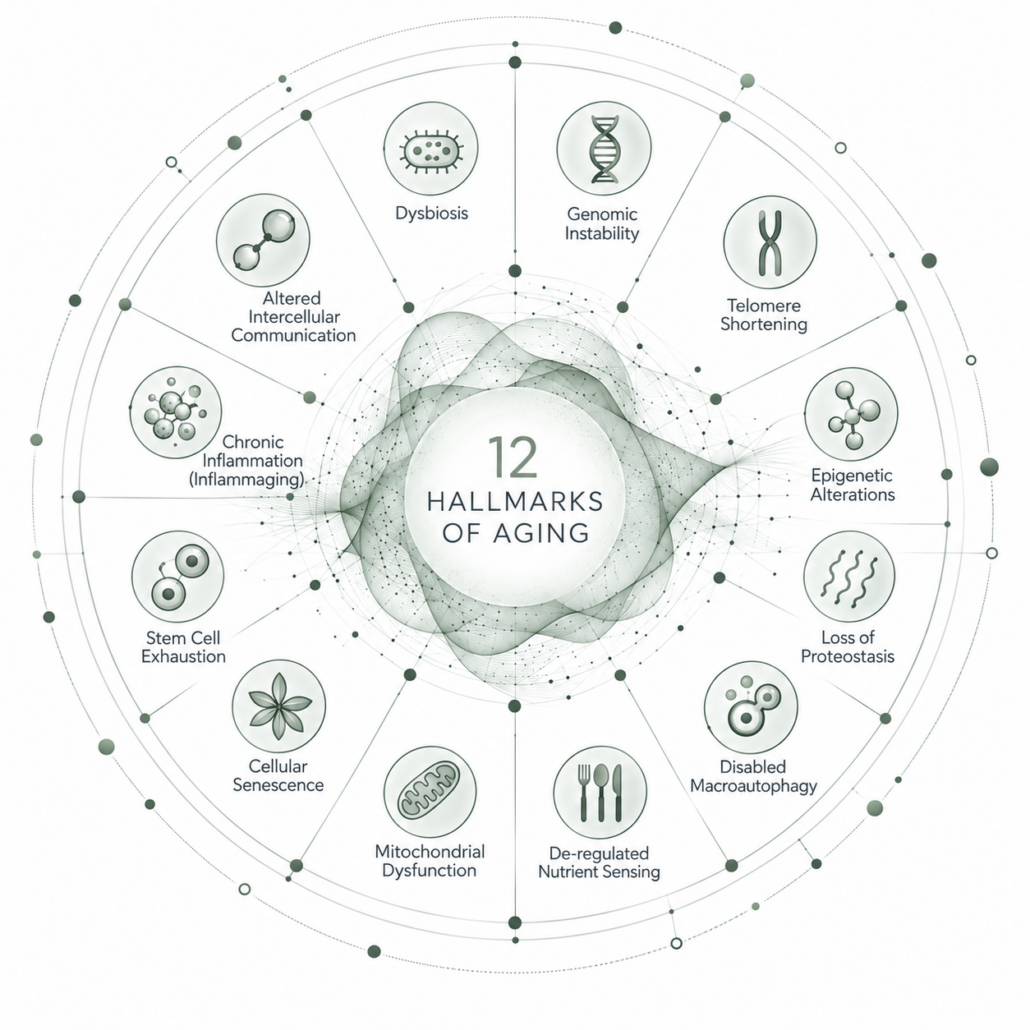
The Hallmarks of Aging provide a scientific framework for understanding interconnected cellular and molecular processes associated with aging.

Processes such as proteostasis, mitochondrial function, cellular senescence, nutrient sensing and epigenetic regulation help inform the selection of potential intervention targets. Their relevance must be assessed in the experimental model and biological context of each study.

Scientific framework: López-Otín et al., Cell, 2023. DOI: 10.1016/j.cell.2022.11.001.

04 Biomarker-Driven Evaluation

Making Biological Effects Measurable

Biomarker analysis provides measurable readouts of biological processes and responses to an intervention.

Molecular, biochemical and functional measures are selected according to the research question, experimental model and intended application. Findings are interpreted in relation to appropriate controls, study design and the limitations of each measure.

Changes in biomarkers can support evidence of biological activity; establishing clinical benefit requires evidence relevant to the intended human outcome.

05 Translational & Clinical Research

From Scientific Hypothesis to Human Relevance

Translational research examines whether findings from experimental models are relevant to the intended human application.

Depending on the project, evaluation may include laboratory studies, biomarker analysis and human clinical investigation. Study design is guided by the proposed mechanism of action, safety considerations and the outcomes to be assessed.

Evidence generated at each stage informs subsequent development and the conclusions that can be supported.

06 Published Scientific Evidence

From Research to Peer-Reviewed Evidence

The publications below include research co-authored by Altya’s founder before the company’s establishment. They document findings from specific formulations and study settings and form part of the scientific background informing Altya’s approach.

NEW BIOTECHNOLOGY · 2017
IN CELLULO RESEARCH

Anti-ageing properties of Khelma Longevity™

Research in cultured human fibroblasts reported increased proteasome protein levels and reduced levels of oxidized proteins following treatment with the studied formulation.

Konstantinos Voutetakis, Vasiliki Delitsikou, Michel Georges Magouritsas and Efstathios S. Gonos

DOI 10.1016/j.nbt.2017.03.002

ANTIOXIDANTS · 2022
IN CELLULO & RANDOMIZED HUMAN STUDY

Antioxidant and Antiaging Properties of a Novel Synergistic Nutraceutical Complex

An evaluation combining cellular experiments with a three-month randomized, placebo-controlled human study. The analysis included 122 participants who completed follow-up and assessed changes in oxidized plasma proteins.

Sophia Athanasopoulou, Marianna Kapetanou, Michel Georges Magouritsas et al.

DOI 10.3390/antiox11030468